Kereta api Holokaus
| Kereta api Holokaus | |
|---|---|
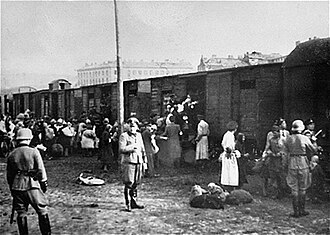 Yahudi Polandia menaiki kereta api di Umschlagplatz, Ghetto Warsawa, 1942. Situs tersebut sekarang dijadikan monumen nasional Polandia. | |
| Operasi | |
| Periode | 1941–1944 |
| Lokasi | Jerman Nazi, Eropa yang diduduki Jerman, negara-negara Blok Poros di Eropa |
| Para korban tahanan | |
| Tujuan | Ghetto transit, kamp konsentrasi Nazi, kamp kerja paksa dan pemusnahan |

Kereta api Holokaus adalah transportasi kereta api yang dioperasikan oleh Deutsche Reichsbahn dan perusahaan kereta api Eropa lainnya di bawah kendali Jerman Nazi dan sekutunya, dengan tujuan deportasi paksa orang Yahudi, serta korban Holokaus lainnya, ke kamp konsentrasi, kerja paksa, dan pemusnahan Nazi.[1][2]
Kecepatan pemusnahan orang-orang yang menjadi sasaran "Solusi Akhir" bergantung pada dua faktor: kapasitas kamp kematian untuk meracuni korban dengan gas dan dengan cepat membuang jenazah mereka, serta kapasitas kereta api untuk mengangkut korban dari ghetto Nazi ke kamp pemusnahan. Angka-angka akurat terbaru tentang skala "Solusi Akhir" sebagian masih bergantung pada catatan pengiriman kereta api Jerman.[3][4]
Catatan kaki
Kutipan
- ^ Prof. Ronald J. Berger, University of Wisconsin–Whitewater (2002). Fathoming the Holocaust: A Social Problems Approach. Transaction Publishers. hlm. 57–58. ISBN 978-0202366111.
Bureaucrats in the Reichsbahn performed important functions that facilitated the movement of trains. They constructed and published timetables, collected fares, and allocated cars and locomotives. In sending Jews to their death, they did not deviate much from the routine procedures they used to process ordinary train traffic.
- ^ Simone Gigliotti, Victoria University, Australia (2009). The Train Journey: Transit, Captivity, and Witnessing in the Holocaust. Berghahn Books. hlm. 36, 55. ISBN 978-1845459277. Pemeliharaan CS1: Banyak nama: authors list (link)
- ^ HOLOCAUST FAQ: Operation Reinhard: A Layman's Guide (2/2).
- ^ Tomasz Wiścicki (16 April 2013), Train station to hell. Treblinka death camp retold by Franciszek Ząbecki [Stacja tuż obok piekła. Treblinka w relacji Franciszka Ząbeckiego], Muzeum Historii Polski [Museum of Polish History], diarsipkan dari asli tanggal October 6, 2013, diakses tanggal 2 February 2016 – via Internet Archive,
Wspomnienia dawne i nowe by Franciszek Ząbecki (en), Pax publishing, Warsaw 1977.
; also in Clancy Young (2013), Treblinka Death Camp Day-by-Day. Tables with record of daily deportations, Holocaust Education & Archive Research Team, diarsipkan dari asli tanggal May 22, 2013, diakses tanggal 2 February 2016 – via Internet Archive,Timeline of Treblinka (en).
Referensi
- Dawidowicz, Lucy S. (1986). The War Against the Jews, 1933–1945. New York: Free Press. ISBN 978-0-02-908030-6.
- Hilberg, Raul (2003). The Destruction of the European Jews. New Haven, Conn.: Yale University Press. ISBN 978-0-300-09557-9.
- Kranzler, David (2000). The Man who Stopped the Trains to Auschwitz: George Mantello, El Salvador, and Switzerland's Finest Hour. Syracuse, N.Y.: Syracuse University Press. ISBN 978-0-8156-2873-6. Winner of the 1998 Egit Prize (Histadrut) for the Best Manuscript on the Holocaust.
- Gurdus, Luba Krugman (1978). The Death Train: A Personal Account of a Holocaust Survivor. New York: National Council on Art in Jewish Life. ISBN 978-0-89604-005-2.
- Hedi Enghelberg (1997). "The Trains of the Holocaust". Enghelberg.com, revised.
Pranala luar

- Transports to Extinction: The Holocaust Deportation Database on the Yad Vashem website
- Video of deportation, unknown location in Poland by SS and Polish Blue Police.
Konten ini disalin dari wikipedia, mohon digunakan dengan bijak.


